
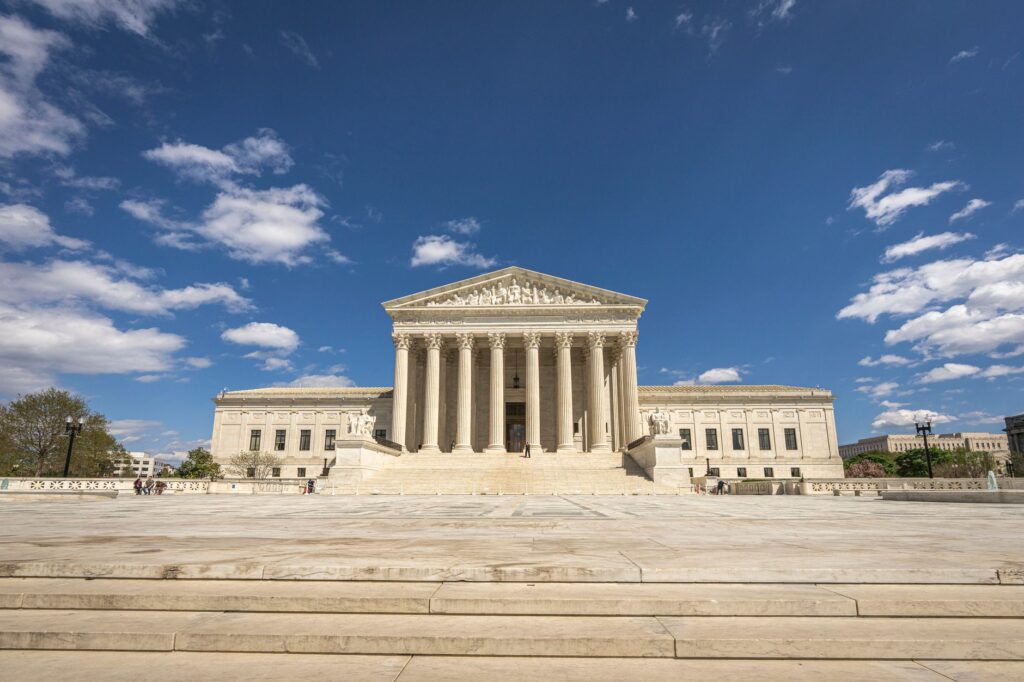
There is something almost quietly unsettling about a court ruling that doesn’t grab headlines the way a war or a market crash does, yet quietly reshapes who gets to participate in a democracy. That is exactly what the Supreme Court has done here, allowing the Trump administration to move ahead with using a federal database to check voter citizenship, even as critics warn it could sweep up legitimate American citizens and wrongly strip them from the rolls.
The specifics matter. As reported, this involves granting states access to a Department of Homeland Security database, ostensibly designed to verify immigration and citizenship status, so they can cross-check it against voter registration lists. The stated goal is straightforward: keep non-citizens from voting. But election experts and civil rights groups have flagged that this database was never built for this purpose, and its error rates, when applied to something as consequential as voter eligibility, could mean naturalized citizens, people with hyphenated or changed names, or those with clerical mismatches suddenly find themselves purged or challenged at the polls. The Supreme Court’s decision to allow this to proceed, without a full airing of those reliability concerns, is the part drawing the sharpest criticism.
Why should anyone outside America care? Because this is a preview of a fight every democracy with mixed immigrant populations will eventually have. The tension between election integrity and access to the franchise is not uniquely American — it echoes debates in the UK over voter ID, in parts of Europe over residency-linked voting rights, and even in India’s own periodic controversies over electoral roll revisions and citizenship verification drives, most notably in Assam. The lesson everywhere is the same: the tools used to verify identity are only as trustworthy as the data feeding them, and bureaucratic databases are notoriously imperfect instruments to wield against fundamental rights. When a court effectively says “proceed first, sort out the errors later,” it sets a precedent that speed and political urgency can outrun due diligence, and that is a template other governments will watch closely, for better or worse.
There’s also the timing. This ruling arrives ahead of contested midterm cycles and amid an atmosphere where election administration itself has become a partisan battleground in the US. Every procedural change to voter rolls now gets read through that lens, which means even a technically narrow ruling carries outsized political weight, both domestically and as a signal of how resilient American institutions are to pressure campaigns dressed up as integrity measures.
My take: the instinct to secure elections against non-citizen voting is legitimate and shared across democracies, including India’s own vigilance on this front. But legitimacy of intent doesn’t excuse sloppiness of execution. A database with known error margins should never be the sole gatekeeper deciding who loses their vote, and courts allowing that arrangement to run first and question it later are gambling with a right that, once denied, is very hard to restore in time for it to matter.
RP analysis · Based on reporting: Supreme Court allows Trump to use controversial database to check voter citizenship