
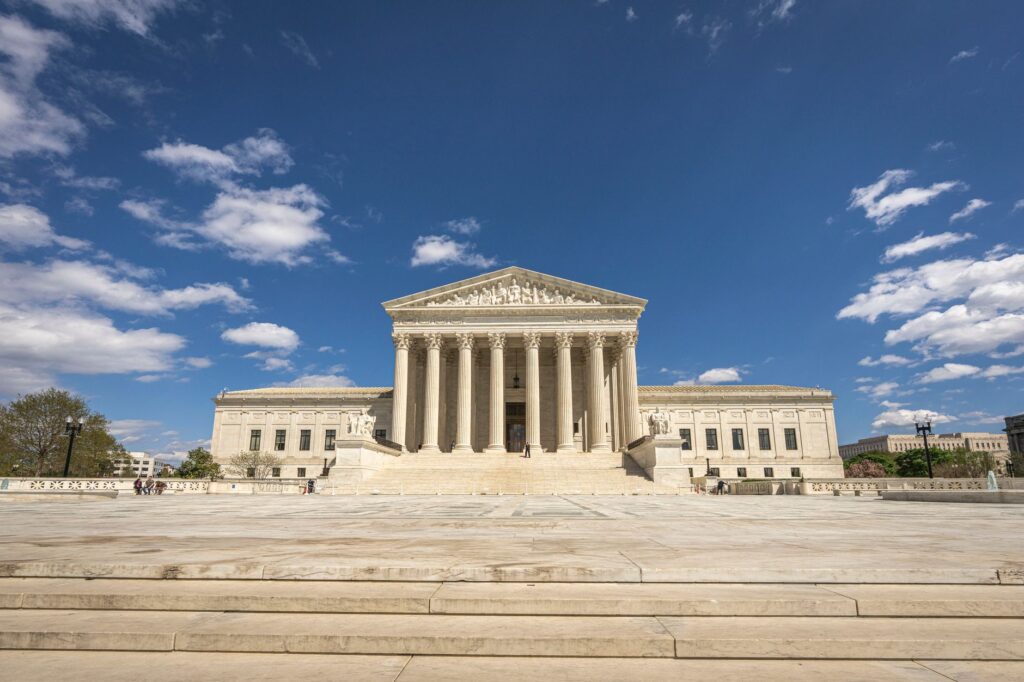
There is something quietly unsettling about a court allowing a government to sift through millions of names using a system even its critics call unreliable, and calling that progress. Yet that is precisely what the US Supreme Court has done, permitting the Trump administration to use a contested federal database to check the citizenship status of registered voters ahead of future elections.
The ruling itself is narrow in the way Supreme Court orders often are, procedural rather than a sweeping verdict on the merits, but its consequences are anything but small. As reported, the database in question has drawn sustained criticism from voting rights groups and state election officials who argue it contains errors significant enough to risk purging eligible American citizens from voter rolls. The administration frames this as a straightforward integrity measure, closing a loophole that could allow non-citizens to vote. Opponents see it as a bureaucratic instrument capable of disenfranchising the very people it is meant to protect, particularly naturalized citizens, minorities, and those with common or mistranscribed names.
Why should anyone outside America care about the mechanics of a voter database? Because this fight sits at the intersection of two forces reshaping democracies everywhere: the politicization of election administration and the growing reliance on imperfect data systems to make consequential decisions about citizenship and rights. From Europe’s debates over digital ID to India’s own long-running conversations around Aadhaar-linked verification and electoral roll revisions, the underlying tension is identical. Technology promises precision, but when the underlying data is flawed, it can quietly manufacture exclusion rather than accuracy. Democracies watching Washington will note how easily a tool justified as protective can become a source of doubt about the fairness of the process itself.
For India, this has more than academic interest. Questions about voter list accuracy, citizenship documentation, and the balance between security and inclusion are not unfamiliar territory, they have played out in debates over the National Register of Citizens and periodic electoral roll revisions. India’s experience offers a cautionary parallel, showing how verification exercises intended to weed out ineligible entries can end up burdening genuine citizens with the task of proving what should never have been in question. Beyond the domestic echo, there is a diplomatic dimension too. Washington has long positioned itself as a benchmark for electoral integrity when engaging with the developing world. A domestic controversy over voter purges, however procedurally justified, complicates that posture and gives capitals like New Delhi grounds to push back gently when lectured on democratic standards.
My take: courts allowing a tool to be used is not the same as vouching for its accuracy, and that distinction matters enormously here. The real test will come after this ruling, in how many eligible voters get caught in the database’s errors, and how loudly, or quietly, that damage is acknowledged. Democracies everywhere should be watching not the legal technicality, but the human cost buried inside it.
RP analysis · Based on reporting: Supreme Court allows Trump to use controversial database to check voter citizenship