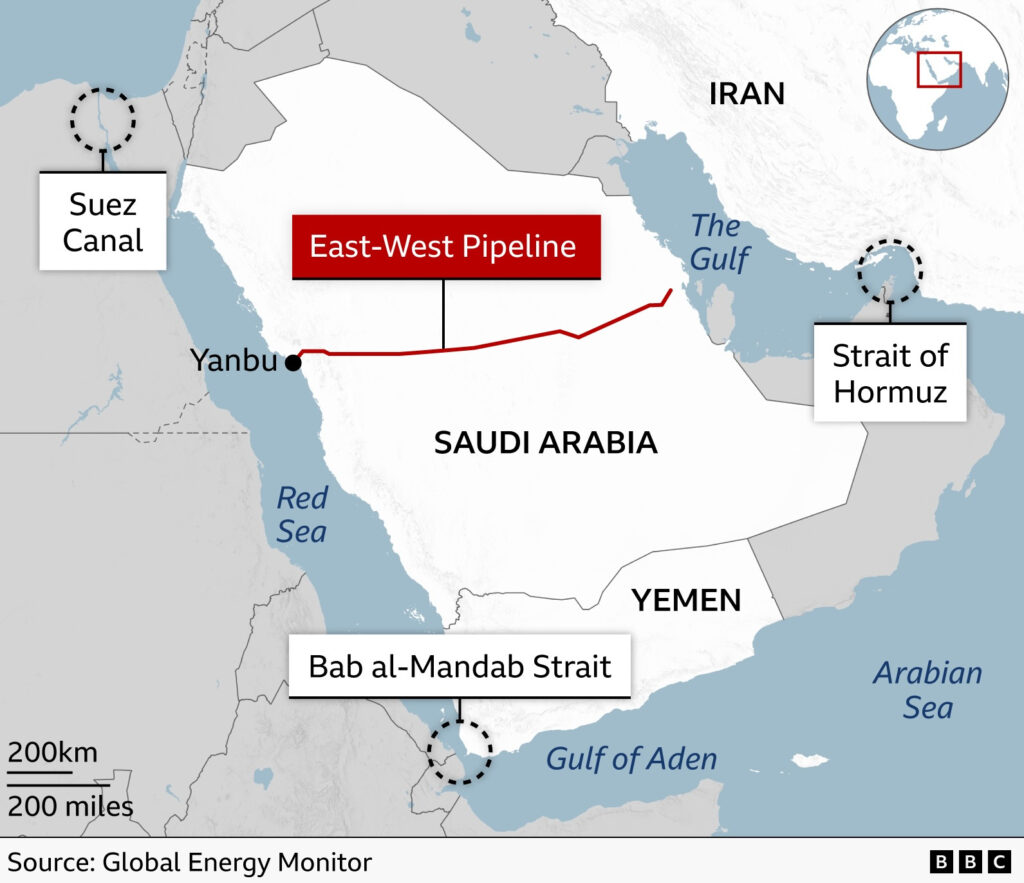
There is something almost theatrical about a militia that spent two years shooting at merchant vessels suddenly declaring the Red Sea “safe” — with an asterisk. Yahya Saree, the Houthi military spokesman, announced that maritime navigation through one of the world’s most critical waterways is now largely unhindered, except, pointedly, for Saudi-flagged or Saudi-linked ships. That carve-out is the entire story.
For context, the Houthis began targeting shipping in late 2023 in what they framed as solidarity with Gaza, hitting vessels they claimed were linked to Israel, the US or Britain. That campaign hammered global trade, forced insurers to jack up premiums, and pushed shipping giants to reroute around the Cape of Good Hope, adding weeks and millions of dollars to voyages. A partial de-escalation, driven by ceasefire dynamics in Gaza and quiet diplomacy, had already eased tensions. Now Saree’s statement suggests a further narrowing of hostilities — but the exclusion of Saudi vessels tells you the Houthi-Riyadh rivalry, born of a decade-long war in Yemen, is far from resolved. This is less a peace gesture than a calibrated signal: we can turn the tap off for the world, but not for you.
Why does this matter beyond Yemen’s borders? Because the Red Sea corridor, feeding into the Suez Canal, carries roughly twelve percent of global trade. Any credible normalisation there is good news for shipping costs, insurance markets and inflation-watchers from Rotterdam to Mumbai. But a threat aimed specifically at Saudi Arabia keeps a live fuse burning under Gulf security architecture at exactly the moment Riyadh is trying to project itself as a stable investment and diplomatic hub under Vision 2030. It also reminds everyone that the Houthis remain a semi-autonomous actor with real strike capability, backed by Iran, and unwilling to fully demobilise regardless of what happens in Gaza or in UN-brokered Yemen talks.
India has a direct stake here. A huge share of its energy imports and container trade transits the Red Sea-Suez route, and Indian naval assets have already been deployed in anti-piracy and escort operations in the wider Arabian Sea and Gulf of Aden. New Delhi has also invested heavily in ties with both Saudi Arabia and the UAE, part of its broader Gulf strategy that underpins remittances, energy security and the I2U2 and IMEC corridor ambitions. A selectively hostile Red Sea, where Saudi shipping remains a target, complicates any Indian bet on the India-Middle East-Europe Economic Corridor as an alternative to China’s Belt and Road. Stability for “everyone but Riyadh” is not stability India can fully bank on.
My take: this announcement should be read as leverage, not goodwill. The Houthis are signalling they can dial global disruption up or down at will, while keeping a very specific pressure point against Saudi Arabia alive. Governments and shipping lines celebrating a “safe” Red Sea should note the asterisk carefully — because in this region, asterisks tend to matter more than headlines.
RP analysis · Based on reporting: Houthis declare Red Sea shipping safe except for Saudi vessels